
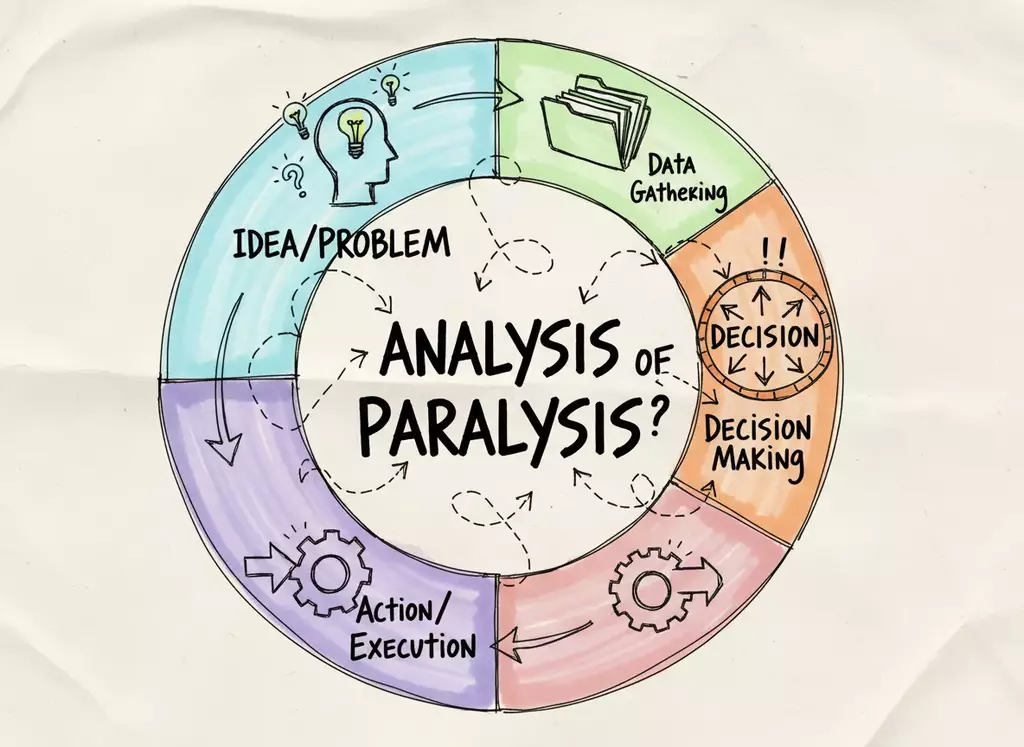
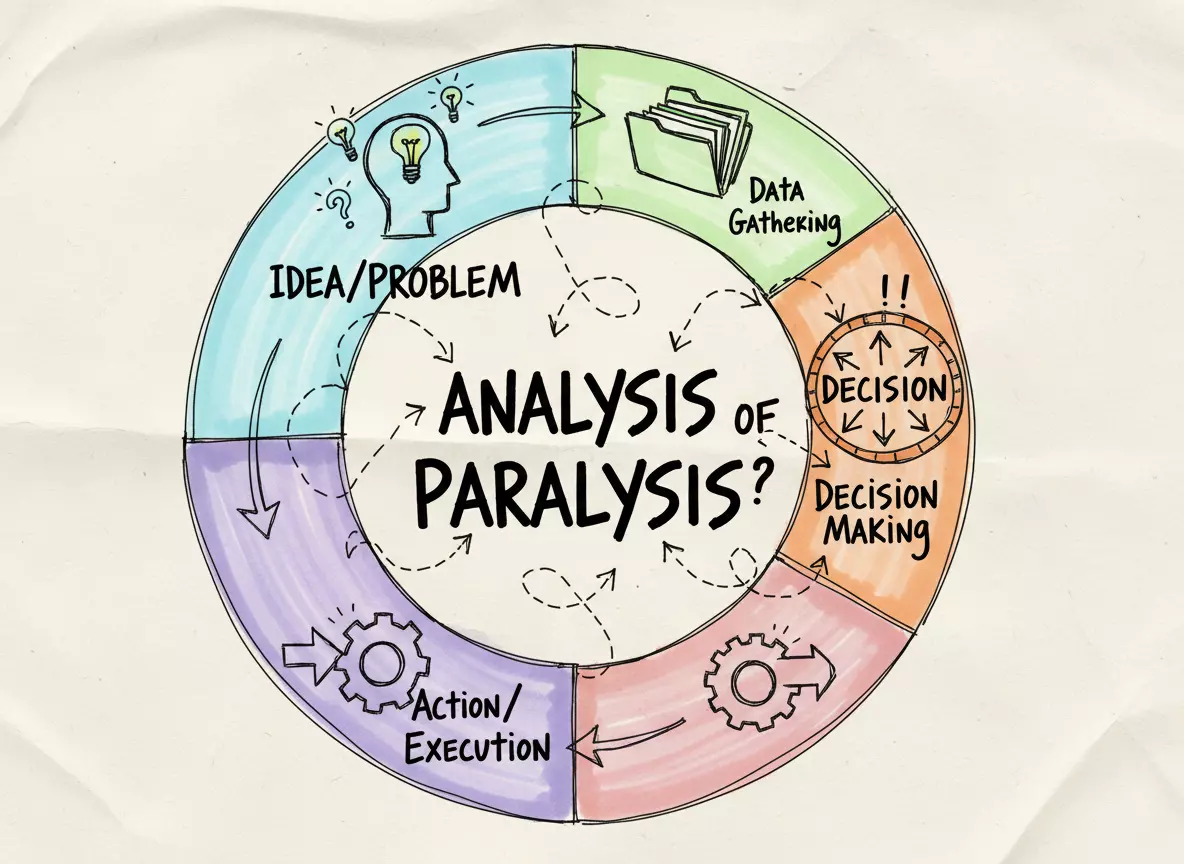
The No-Overthinking Workflow: A Simple System to Break Analysis Paralysis
If you ever find yourself stuck thinking instead of doing, comparing instead of choosing, or planning instead of building, you’re not alone.
This guide introduces a simple, practical system to break the cycle of analysis paralysis and help you move forward with clarity and confidence.
Whether you’re building a website, learning a new skill, or growing a side business, this workflow helps you stay focused, productive, and motivated every single day. If you’re interested the MLM opportunity this will be very useful to you.
⭐ Breaking the Cycle of Analysis Paralysis: A Simple Guide for Everyone.
Aesop’s Fable has lessons for us. The Fox and the Cat.
Before we continue, there’s a short story I’d like you to think about. You may already know it, but if not, it’s incredibly relevant to everything we’re discussing here. It’s Aesop’s fable The Fox and The Cat.

The story goes like this:
A cat and a fox were travelling together when an argument broke out about which one of them was the cleverest.
“I am,” said the fox confidently. “I know many tricks, and you only know one.”
The fox was proud of how smart he was.
The cat, on the other hand, didn’t boast. He relied on his single skill — one simple trick that had always served him well.
As they walked, they suddenly heard the sound of hounds in the distance. The cat didn’t hesitate for a moment. Up the nearest tree he went — quick as lightning.
The fox, however, had a problem. He did have many tricks… but now he had to choose one.
Should he run? Hide? Dig a hole? Zig-zag? Play dead?
With too many ideas spinning in his head, he froze — and the hounds caught him.
The cat survived because he trusted his one effective plan.
The fox failed because he had too many plans and couldn’t decide.
The moral is simple:
Having many ideas is great — but prioritising them is essential.
One clear action beats a dozen possibilities you never use.
While we’re on Fox’s and Cats, birds came to mind, a Chicken in fact, a Chicken lays many eggs for one simple reason.
Think of it like this: if you have six eggs and try to hatch them all with equal attention, you might lose all. But if you focus on the strongest egg — the one most likely to thrive — you increase your chances of success. The others are likely hatch, but your energy isn’t divided.
This is exactly what happens when we face too many choices. Without focus, we get stuck. With one good decision, we move forward.
We’ve all been there at some point.
You want to start something — a new project, a hobby, a life change, or simply a task that’s been sitting on your list for too long.
You feel that spark of motivation… and then suddenly you’re stuck.
Not because you’re lazy.
Not because you don’t know what to do.
But because your brain slips into analysis paralysis — the loop of overthinking that prevents action.
The good news?
You can break that loop.
And you don’t need complicated systems or strict routines — just a few practical habits that gently guide your mind back into motion.
Let’s walk through it together.
🔷 What Is Analysis Paralysis?
Analysis paralysis happens when you think so much about something that you end up doing nothing at all.
Instead of moving forward, your mind keeps:
- comparing
- researching
- planning
- second-guessing
- imagining problems
- starting again
It’s an exhausting cycle — and it steals your momentum.
The surprising part?
It doesn’t happen because you’re unmotivated.
It happens because you care and your brain wants the “perfect” choice, solution, or moment. That pressure triggers hesitation.
⭐ The Cycle of Analysis Paralysis (How It Usually Happens)
- You decide to do something.
A task, a goal, a project — big or small. - You gather information.
A sensible first step. - More options appear.
Suddenly there’s a “best” way to do everything. - Overthinking takes over.
“What if I choose wrong?”
“Maybe there’s a better option…” - Motivation drops.
Everything feels harder than it should. - Delay or avoidance.
You postpone it… and the cycle starts again.
If this feels familiar, don’t worry, you’re not alone. Everyone experiences this. The trick is recognising it and having tools to break out.
⭐ How to Break the Cycle (Simple Strategies That Work for Everyone)
These approaches don’t require apps, planners, or elaborate systems.
Just small habits that gently shift your mind from thinking to doing.
🔷 1. Start With One Small Action
Don’t try to complete the whole task.
Just begin the first tiny step:
- open the document
- pick one option
- write one sentence
- tidy one part of the room
Small action cuts through overthinking like a knife.
🔷 2. Give Yourself a Decision Window
Set a 5–10 minute limit for choosing.
Enough time to compare briefly — not enough time to spiral.
When the timer ends, decide.
You can always adjust later.
🔷 3. Aim for “Good Enough” — Not Perfect
Perfection creates pressure.
Pressure leads to hesitation.
Hesitation causes paralysis.
Instead, aim for “good enough for now.”
Things can be improved once they exist.
🔷 4. Limit Your Choices
More options = more thinking.
Try this rule:
- Never compare more than two options at a time.
Your brain relaxes instantly.
🔷 5. Set a 15-Minute Frustration Limit
If you’re stuck:
- Try for 15 minutes
- If it’s not flowing → stop
- Switch tasks or ask for help
Momentum is more important than stubbornness.
🔷 6. Celebrate Small Wins
Your brain needs proof you’re making progress.
Tiny wins build confidence — and confidence is the antidote to hesitation.
⭐ Why This Matters
Analysis paralysis doesn’t just stop tasks — it stops growth.
When you move from thinking to action, even in small steps:
- stress drops
- clarity increases
- confidence rises
- you build real momentum
- you actually enjoy the process again
And the best part?
These habits become automatic before you realise it.
⭐ Final Thought: Motion Creates Clarity
You don’t need the perfect plan.
You don’t need all the answers.
You don’t need to feel 100% ready.
You just need to start.
Because once you begin, clarity follows action — never the other way around.
Decision fatigue: what to do when endless choices are sapping your energy.
This is a subject that is very prevalent. It a serious cause of frustration, fatigue, delays, and is the cause of missed project targets. It’s a very human problem. To find out more on this particular subject I suggest you follow this link to www.atlassian.com on the subject of Decision fatigue, an incredibly common and surprisingly draining condition.
Thanks for reading this post. Phil Donnelly.








Leave a Reply